Unlock the Editor’s Digest for free
Roula Khalaf, Editor of the FT, selects her favourite stories in this weekly newsletter.
This week marks the arrival of a sequel to one of the best albums in the often spotty format of the charity compilation. Help(2) is a collection of songs by mostly British acts but also Irish and US ones too, ranging from the old guard of Oasis, Arctic Monkeys and Pulp to younger musicians such as The Last Dinner Party and Fontaines DC. It has been put together by War Child, the international charity for children in combat zones.
Help(2) is the follow-up to Help, which came out in 1995 when War Child was a fledgling organisation aiding children in the Bosnian war. Like the soundtrack to Trainspotting, but more comprehensive in scope, the first compilation was a snapshot of its era. It reflected a boom time for British music, with a Glastonbury-style line-up drawn from Britpop, trip-hop, big beat and dance music.
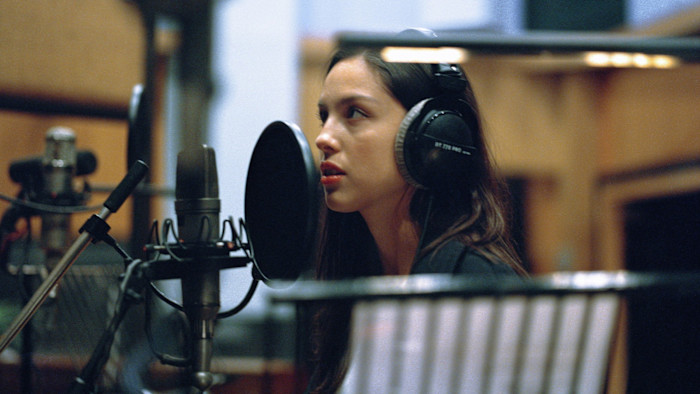
The new compilation is cast in a similar mould. It has 24 tracks compared with the original’s 20. Oasis have donated a live version of “Acquiesce” from their comeback tour, while Arctic Monkeys are debuting their first song in four years. Pulp, Portishead’s Beth Gibbons and Blur’s Damon Albarn and Graham Coxon return from the class of ‘95. Newcomers are mostly drawn from indie music. One of pop’s biggest stars, Olivia Rodrigo, covers “The Book of Love” by The Magnetic Fields, cult purveyors of lo-fi literariness.
War Child’s aims are the same as in 1995, although its field of operation has expanded to 14 conflict zones, including Sudan, Gaza and Ukraine. The urgency of its work is brought home by the coincidence of Help(2)’s release at a time when Iran has come under heavy bombardment from the US and Israel, with Iranian authorities reporting more than 160 deaths, mostly of young children, after a strike on a girls’ school.
But there’s also a discontinuity between the first and second compilations. James Ford, who has worked previously with many of the acts, is Help(2)’s producer. “I remember the first Help record,” he says. “I was in my teens, and I remember what a cultural moment it was. That’s definitely something that we aspire to with this record. But we’re under no illusions that it’s more difficult to create something like that now.”
In 1995, Help sold 70,000 copies in a single day. It would have topped the main UK album chart, had it not fallen prey to a pernickety rule disbarring multi-artist compilations. Now, Help(2) faces a bigger obstacle. With the collapse of physical sales — notwithstanding the important niche market for vinyl — it has become harder to make money from albums. In that sense, War Child’s new compilation is a throwback to a vanished age.
“We tried really hard to make it something you could listen to in an old-school way,” Ford says. “I imagined it as being on a piece of vinyl. Even as we arranged the songs, we were doing it as sides of vinyl rather than as something that we thought would be an amorphous blob on a streaming service.”

Help earned more than £1.25mn, almost £2.6mn in today’s money. It was instrumental in setting the new charity on its feet. “If that hadn’t come along, War Child would have undoubtedly disbanded,” says Rich Clarke, who heads its music wing.
Clarke would be delighted if Help(2) can earn the comparatively much lower sum of £1mn. “The financial impact will be significant but I think the ripple effect will be awesome,” he says. “The immediacy of online media and the way the album can be reshared is an opportunity.”
The original Help set a benchmark for musical quality in charity compilations. Participants were encouraged to bring their best work to the day-long recording session, not some B-side reject. Radiohead’s “Lucky” appeared on the album, two years before resurfacing on OK Computer. This was the start of the heyday of the charity compilation album. The format’s peak years were between the early 1990s and the mid-2010s, since when there has been a decline. The economics of streaming is one reason. Another is enhanced sensitivity about the complications of mixing charity and showbiz.

“It’s a shame that it’s like a lost art form,” says Aurora Nishevci of The Last Dinner Party. “I guess it comes from the insecurity of feeling that it’s performative activism. But it’s good that people do question that, to make sure the money is going to the right places.”
The keyboardist’s parents are from Kosovo: they were living there during the Bosnian war when the first Help came out. “So for me doing this album means a lot,” she says.
Her band’s song is “Let’s Do It Again!”, an exuberantly ornate, arms-flung-wide number inspired, according to singer Abigail Morris, by the persona projected by Leonard Cohen in his album Death of a Ladies’ Man — “a cabaret performer who is slightly past their prime and desperately in love with someone.” Her rationale for doing the project could apply as much to 1995 as 2026.

“We’re musicians and this is what we love to do,” she says. “If we can help with something further from what we do every day, then we will do that. And if we’re able to do that with the skills that we have, which is songwriting and performing, then we’ll make it as entertaining as possible, so that it can be part of something that goes towards the greater good.”
‘Help(2)’ is released by War Child
Find out about our latest stories first — follow FT Weekend on Instagram, Bluesky and X, and sign up to receive the FT Weekend newsletter every Saturday morning