
President Donald Trump and Secretary of Education Linda McMahon during an event in the Rose Garden of the White House in Washington, Aug. 24, 2026.
Will Oliver | Bloomberg | Getty Images
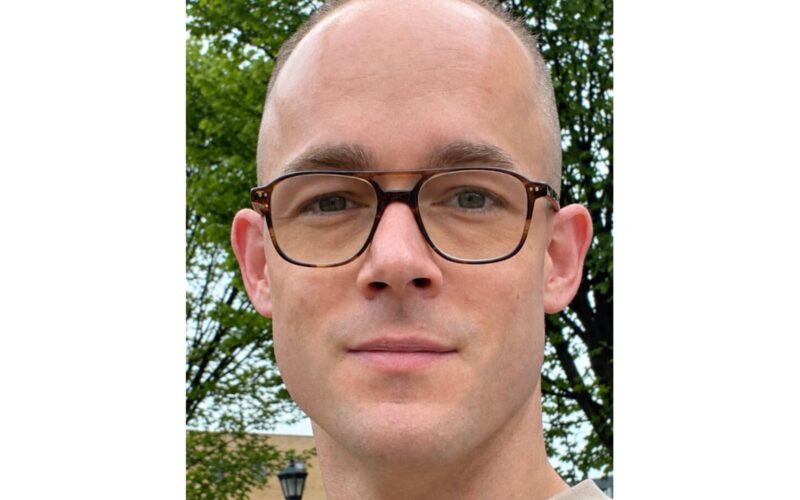
Earlier this year, Nicholas Yund was months away from having his federal student loans forgiven. Then, in early August, the University of Minnesota employee logged into his account and saw his forgiveness date pushed back by nearly two years.
“I could barely breathe,” said Yund, 45. “That’s when I went online to various Facebook and Reddit groups and saw it was happening to thousands of other people.”
Yund’s qualifying-payment count fell from 116 to 93, leaving him 27 payments short of the 120 required for Public Service Loan Forgiveness, a federal program created in 2007 that cancels the remaining student loan debt of borrowers working for a government or nonprofit employer.
The reduced payment counts for Yund and other PSLF borrowers result from what the U.S. Department of Education has said is an effort to correct payment-count errors made during the Biden administration.
“These errors resulted in inaccurate payment counts for some borrowers,” a department spokesperson wrote to CNBC in an email. “The Department remains committed to ensuring that every qualifying payment is properly credited to a borrower’s account.”
Nicholas Yund
Courtesy: Nicholas Yund
The sudden reductions in payment counts have left borrowers scrambling to determine which months were removed and whether their current timelines are correct.
The American Federation of Teachers recently sued the Trump administration over its management of the PSLF program, claiming that it is unlawfully blocking tens of thousands of borrowers from student loan forgiveness. Filed Oct. 30, the suit is still pending.
For borrowers nearing the finish line, losing qualifying months can mean staying in repayment — and in qualifying public service work — for years longer than expected. It can also delay other financial goals.
Yund said a longer wait for student loan forgiveness would have kept him from putting more money toward retirement savings and enjoying more disposable income. His current student loan balance is around $20,000.
But in the end, he found a way to get his qualifying PSLF payments restored. Here’s how.
Yund’s fight for student loan forgiveness
When Yund saw his PSLF count drop, he called his loan servicer, Missouri Higher Education Loan Authority, or MOHELA, and asked what had happened. The answer offered little reassurance.
“The agent said they had received lots of calls regarding that issue,” Yund said. He said he was told there had been a technical problem but got no explanation of what it meant for his account or when it might be fixed.
A MOHELA spokesperson referred CNBC’s questions to the Education Department, which did not respond to questions about Yund’s case.
Yund began looking for answers elsewhere.
That month, he opened cases with the Minnesota Attorney General’s office and Democratic Sen. Amy Klobuchar’s office. He also had something that could help make his case: a complete record of his payments.
“I kept bank statement records of every payment made as well as downloaded all of my payment history from my student loan servicers,” Yund said.
Brian Evans, press secretary at the Minnesota Attorney General’s office, said it referred Yund’s complaint to the state’s Student Loan Advocate, who, he said, “is in a better position to help resolve his complaint.”
Sen. Amy Klobuchar, D-Minn., speaks during a news conference following Senate Democrat policy luncheons at the Capitol in Washington, June 3, 2025.
Eric Lee | Bloomberg | Getty Images
Klobuchar’s office told him it had opened a congressional inquiry with the Education Department on his behalf, according to communications between the senator’s staff and Yund reviewed by CNBC.
“Senator Klobuchar’s office was very helpful and timely, reaching out to me directly by phone with additional questions and concerns,” Yund said.
Those communications show the Education Department responded to the senator’s office, saying that its review found that some of Yund’s payments did not qualify under standard PSLF.
But the department said that he could receive credit for that period through Temporary Expanded Public Service Loan Forgiveness, or TEPSLF. That program can count payments made under certain repayment plans that are not usually eligible for standard PSLF, provided the borrower meets additional requirements, such as working in a qualifying public service position.
The crispy half chicken
On Sept. 6, Yund logged into his account again. Most of his payments had been restored, but he was still two payments short of his earlier count.
“I was incredibly frustrated with the lack of oversight and errors demonstrated by the Department of Education,” Yund said.
But he also saw a reason to keep pushing: “This was an opportunity to advocate for myself and, by extension, draw attention to an important problem we are facing.”
His advice to other student loan borrowers? “Be persistent to the point of annoying,” he said. “Call your Senators and House Representatives to open cases on your behalf. Do not give up hope.”
Be persistent to the point of annoying.
Yund is once again nearing debt forgiveness. He had expected it in November; now he anticipates it in January or February.
He already knows how he’ll celebrate when he’s student loan-free: dinner at Meritage, a popular French brasserie in St. Paul. He knows what he’ll order, too. He’s had plenty of time to think about it: the crispy half chicken.
Source link