When it comes to choosing a college, students are increasingly weighing the potential return on investment — and rightfully so.
With a growing number of schools now charging more than six figures a year, cost is a significant hurdle. The sticker price alone is enough to question whether a college degree is worth it, recent studies show.
“At $100,000 a year, it’s kind of like a luxury good,” said Adam Nguyen, founder of Ivy Link, a college admissions advising firm.
But rising tuition costs are not the only issue. Artificial intelligence is also rapidly disrupting the job market, and some employers now say they are placing greater emphasis on skills and experience than on degrees alone. For college-bound students, deciding whether and how to pursue higher education has become complicated.
Many factors — including how much financial aid is offered and how much students have to pay out of pocket, as well as the choice of major, future earnings potential and how long it takes to graduate — help determine whether college pays off, according to a 2025 study by the Federal Reserve Bank of New York.
“We are noticing more and more families questioning the ROI of different universities,” said Jamie Beaton, co-founder and CEO of Crimson Education, a college consulting firm. “At the top of the market, schools like MIT, Princeton, Harvard, Stanford, the return is not at all in doubt,” Beaton said. “Just attending one of these top universities has a strong signaling factor to future employers.”
However, a number of other colleges also continue to offer a worthwhile return, Nguyen said. “The top schools tend to have better ROI,” he said, followed by “the flagship state universities.”
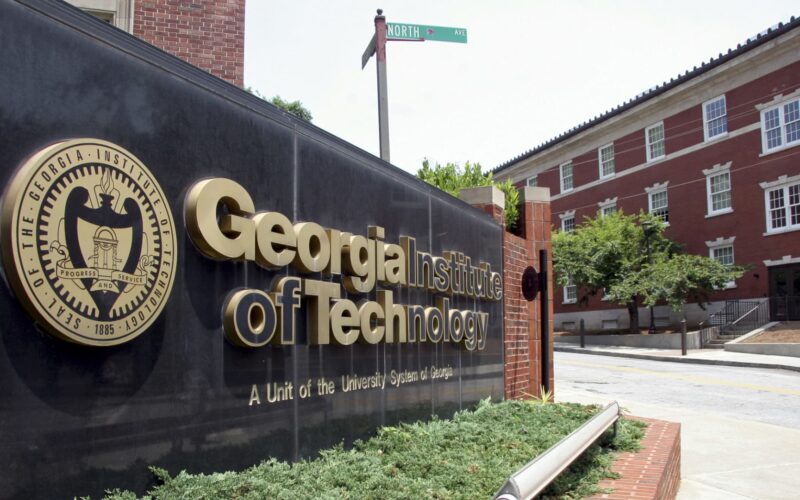
According to a new report by The Princeton Review — which ranked colleges by overall value, factoring in academics, affordability and career prospects for graduates — top contenders include Georgia Institute of Technology, University of North Carolina at Chapel Hill, Harvey Mudd College and University of Michigan.
The education services company’s new 2027 report is based on data from its surveys of administrators, students and alumni at more than 650 colleges in the 2025-26 school year. It factors in information on cost, financial aid, career services, student debt and graduation rates.
“In our opinion, they are truly the most exceptional in the nation at delivering outstanding academics, affordable cost, and great career foundations,” said Rob Franek, editor-in-chief of The Princeton Review. These colleges “are ROI standouts in many ways — from their outstanding academics to amazing career services — but most of all for the generous financial aid they award to their students with need,” he said.
Among the top five private schools on The Princeton Review’s list, the average sticker price — including tuition and fees plus room and board — was $97,813 as of June 2026. The average scholarship awarded to students with need was $75,646.
Among the five public schools on this list, the average in-state price was $38,194, and the average scholarship grant awarded to students with need was $26,976.
Source link