Ariel Skelley | Getty Images
With National College Decision Day approaching, college affordability is a top concern for most students and their parents.
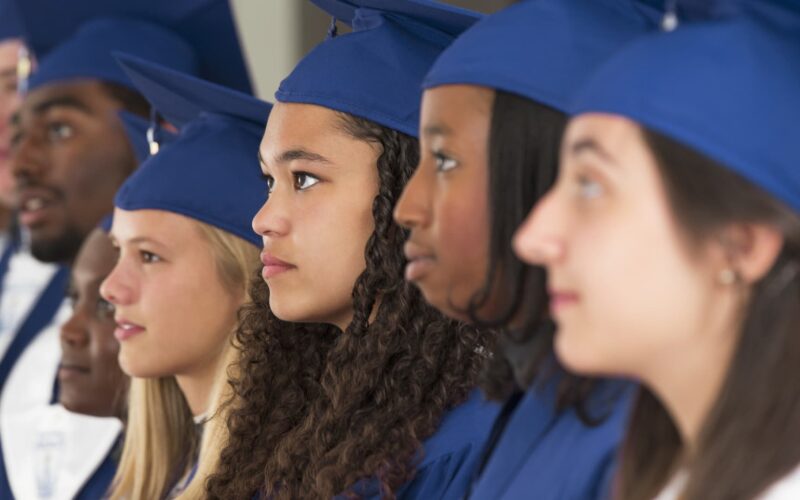
Around 46% of 2026 high school graduates will go on to a four-year college or university, according to a new report by NerdWallet. Many of them will take out student loans to help cover the tab.
By the time they graduate from college, these students could each borrow an average of $43,000 in federal and private aid to earn a bachelor’s degree, according to the NerdWallet analysis of National Center for Education Statistics data — up from $40,000 the year before.
Rising college costs are largely to blame for swelling student debt balances.
In recent decades, tuition has increased 5.6% a year, on average, outpacing inflation and other household expenses, according to a report by J.P. Morgan Asset Management — and it’s still rising about 5% a year.
That has helped put a growing number of schools near the $100,000 threshold for total annual cost to attend, according to data from The Princeton Review.
In most cases, families cover about half of college costs with income and savings. Free money from scholarships and grants accounts for more than a quarter of the costs and student loans make up most of the rest, Sallie Mae’s annual How America Pays for College report found.
Currently, around 42.8 million Americans hold $1.696 trillion in federal student loans, and more than 1 million high school graduates will take out new education debt in the months ahead, according to higher education expert Mark Kantrowitz.
“This year’s high school graduates face changes on multiple fronts when it comes to paying for college,” Kate Wood, NerdWallet’s home and mortgage expert, said in a statement. “For one, federal student loans taken out after July 1 will have a new set of repayment options.”
In fact, there are now fewer repayment options and stricter rules regarding debt forgiveness compared to previous years.
The changes to the federal lending system follow the passage of President Donald Trump‘s “big beautiful bill” last July. Starting this year, the legislation also caps the total amount of federal loans students can borrow — new borrowers will have a total lifetime limit of $257,500 for all federal student loans.
“The changes introduced by the OBBBA legislation will reduce the amount of federal student loans borrowed by parents and graduate/professional students, but not the number of borrowers,” Kantrowitz said in an email. “The lower annual and aggregate loan limits will cause more borrowing of private student loans.”
Private student loans can fill the gap once federal aid and scholarships have been exhausted but the rates on those loans tend to be pricier than federal loans. In general, experts recommend limiting private borrowing as much as possible.
Source link