Unlock the Editor’s Digest for free
Roula Khalaf, Editor of the FT, selects her favourite stories in this weekly newsletter.
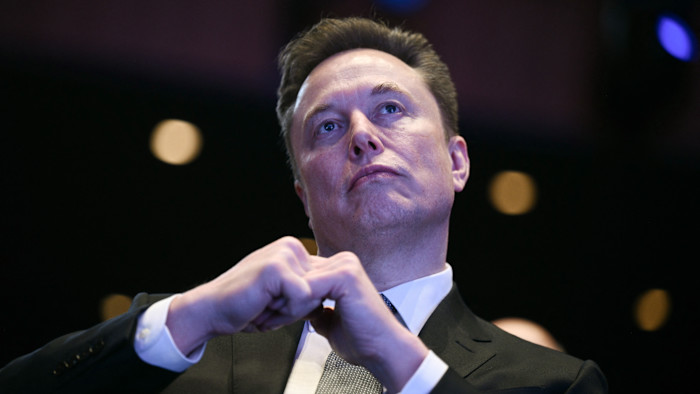
The judge in Elon Musk’s more than $130bn lawsuit against OpenAI and Microsoft has suggested the billionaire’s claim for damages is based on “numbers out of the air”, but ruled he can still make his case to a jury.
Lawyers for OpenAI, at a hearing on Friday, tried to convince Judge Yvonne Gonzalez Rogers to dismiss evidence from an expert witness to support Musk’s claim for $134bn in damages.
The world’s richest man argues OpenAI and chief executive Sam Altman defrauded him by abandoning its non-profit roots after he had made charitable donations to the AI lab a decade ago. A trial is set for April.
“A jury is going to understand that [Musk’s expert] is pulling these numbers out of the air,” Rogers told a pre-trial hearing in California’s northern district on Friday.
“Do I find it convincing? Not really. Based on what I’ve seen, do I find it particularly persuasive? Not really,” the judge added.
But Rogers did not grant OpenAI’s motion to dismiss the testimony, saying she was not prepared to make that decision on the basis of “a five-page motion” and would instead allow the jury to hear the evidence.
The calculations of damages are at the heart of Musk’s claim, which, if accepted by the jury, could put OpenAI on the hook for $109bn and Microsoft for $25bn.
The judge commented in court on Friday that if she agreed to OpenAI’s motion to exclude Musk’s expert, “this trial is done, because they have no evidence of damages, right?”
Musk’s $134bn claim is based on an analysis by expert witness C Paul Wazzan, an economist at the consulting firm Berkeley Research Group and a venture capitalist.
Wazzan concluded that Musk’s early donation of $38mn, along with his non-monetary contributions to OpenAI, accounted for 50-75 per cent of the value of OpenAI’s not-for-profit arm, which owns just over a quarter of the for-profit business, recently valued at $730bn.
Musk co-founded OpenAI in 2015 and provided significant early investment and support, but left the board in 2018 after clashing with Altman. In 2023 Musk founded xAI, a rival AI lab that has since merged with his rocket company, SpaceX.
OpenAI claims the lawsuit is driven by commercial motives and is part of “an ongoing pattern of harassment”.
Lawyers for OpenAI had sought to exclude portions of Wazzan’s testimony. William Savitt, a partner at Wachtell, Lipton, Rosen & Katz, argued on Friday that there was “no equation” by which Wazzan had arrived at his conclusion and questioned his methodology.
The trial is scheduled to begin on April 28, when Musk’s lawyers will seek to demonstrate that OpenAI and Altman breached their contract and defrauded Musk.
Earlier in the hearing, Rogers highlighted the challenge of selecting a jury for such a high-profile case. “I don’t know if I’ll ask [prospective jurors] a question about billionaires as they are all billionaires, they are all equally liked or disliked.”
Source link