A trip to Stanford University more than two decades ago inspired the then-aerospace engineering student Helmut Schönenberger that Germany needed to emulate the Californian school’s hub for innovation.
In 2002, after dedicating his doctoral thesis to that subject, Schönenberger set up the Technical University of Munich’s entrepreneurship centre UnternehmerTUM alongside BMW heiress Susanne Klatten.
In the years since, UnternehmerTUM — named after the German word for entrepreneurship — has emerged as a leading centre for start-ups in Germany and tops the FT ranking of Europe’s leading start-up hubs for the third year running. It has several high-profile companies among its alumni, such as satellite launcher Isar Aerospace, software group Celonis and the travel-tech company Flix.
The hub today is “about 100-times” what Schönenberger, who serves as chief executive, originally envisioned it to be. “It’s this self-reinforcing flying wheel,” he says.
The German government has since backed another 10 start-up factories in cities such as Frankfurt and Hamburg, modelled after the Munich-based hub’s success, he adds.
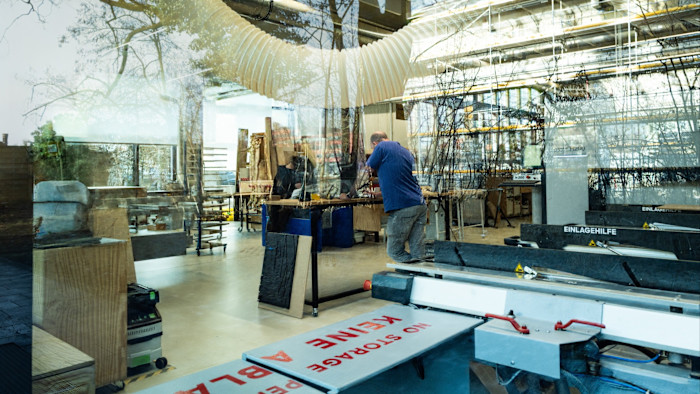
With multiple locations, and more than 500 employees working with over 15,000 participants a year, UnternehmerTUM offers support for entrepreneurs from training to networking. It has accelerator programmes, spaces for prototyping products, and can even provide financing from its own venture capital firm with assets topping €700mn.
“The teams that go through it have the advantage of combining research excellence with company building knowhow, which is missing from most other German universities,” says Filip Dames, founding partner of venture capital group Cherry Ventures and a board member of the German Start-ups Association.
Start-ups with ties to UnternehmerTUM are now raising a total of about €2bn per year, Schönenberger says. In total the centre has supported more than 1,000 businesses.
For Flix, founded in 2011 by three friends as a platform offering bus and train services, the hub played a key role early in the company’s history. It “identified us quickly and funded us”, says co-founder Daniel Krauss.

Alongside early investment from the centre’s venture capital fund, UnternehmerTUM also put Flix’s founders in touch with industry members outside the tech ecosystem, some of whom were early members of the start-up’s advisory board.
“They quickly connected us with old money, old industry people [who] have been successful, Krauss says. “If you want something, reach out — they come back in minutes and [will] always be of help.”
Flix, which has since risen to a multi-billion-euro valuation and bought the US bus company Greyhound Lines in 2021, is now giving back. Its founders participate in events at UnternehmerTUM and invest personally in the centre’s latest venture capital funds.
Isar Aerospace, which is valued at $1bn, has a similar success story. Alongside funding from the hub’s venture capital arm, the centre’s network helped the company seek out suppliers and other partners.
UnternehmerTUM has also benefited from the growing prominence of Munich as a European hub for start-ups. While previous generations of German entrepreneurs were often based in Berlin, the rising importance of sectors such as defence and robotics has refocused investor attention on Munich.
Defence in particular has been a growing focus for investors, and the centre has become involved, supporting a start-up hub on the sidelines of February’s Munich Security Conference. Total European venture capital investment rose 5 per cent in 2025 to €66bn, a post-pandemic high, according to market researcher PitchBook. Those gains were driven by big deals for the continent’s top AI and defence companies, many of which are based in or near Munich.
With the spotlight on European security and defence, Munich is at a “huge advantage” compared with other tech hubs around the world because of this expertise, says Schönenberger.
That has dovetailed with the centre’s efforts to connect its entrepreneurs with the broader ecosystem that includes both well-known German companies such as Siemens and Daimler, and the local offices of US tech groups such as Google and OpenAI.
“It perfectly combines all of the ingredients that are required to build great companies,” says Andre Retterath, a partner at venture capital firm Earlybird, who says he scouts for investments at the hub and completed his PhD at the Technical University of Munich.
Previously, people would join the university for its “technical strength, not necessarily anything related to entrepreneurship”, he adds, “but it has changed materially”.

The companies emerging from stand out against the challenges facing Germany’s economy, developing ventures in fields ranging from quantum technology to industrial robotics.
Entrepreneurs and investors credit the hub with creating a unique environment for start-ups.
The ecosystem is well set up, says Krauss, as it “creates early access to talent and innovation and eventually also to funding”.
The success of the centre today marks a contrast from the early days, when Schönenberger had to hand out flyers convincing students to enrol in programming.
“Like every journey it’s constant adventure and constant challenge,” he says. “We are still in the growth and learning curve.”
Source link