Unlock the Editor’s Digest for free
Roula Khalaf, Editor of the FT, selects her favourite stories in this weekly newsletter.
A disheartening phenomenon in the age of streaming TV is “second screening”. This involves scripting programmes for viewers who are only watching with one eye because the other is on their phones. A classic tactic, actor Matt Damon revealed recently: repeat the plot three or four times in the dialogue.
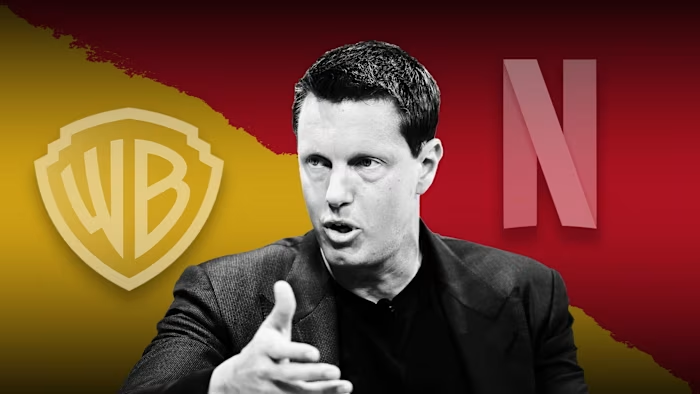
Paramount Skydance is doing something similar. The US media group thinks its $108bn offer for Warner Bros Discovery is better than a bid from Netflix — and has pointed this out repeatedly, while tying up some loose ends in its financing. But now it needs to take the plot forward.
At the last count, Netflix is offering WBD investors $27.75 per share in cash, plus ownership of WBD’s cable-TV business, which will be spun out. Paramount is offering $30 in cash, but would keep the cable assets for itself. Much of the debate has hinged on the value of the cable “stub”, and each side’s chances of approval by competition authorities.
Trouble is, neither side’s argument is decisive. In terms of value, WBD says the cable business is worth at least $1 a share, for example, which would bring Netflix’s bid to, at worst, $29. Paramount thinks its bid is superior because the equity in the cable business is actually worthless. But ditching Netflix’s offer, already backed by WBD’s board, would land shareholders with a $1-per-share penalty, trimming the value of Paramount’s bid to $29 as well.
Antitrust, too, is hard to call. Netflix has a bigger share of streaming, which puts it at a regulatory disadvantage, but could always offer concessions to reduce its clout. Paramount has Donald Trump connections, but those may not help when European countries and some US states weigh up the merits of the deal. Senator Elizabeth Warren of Massachusetts, a known competition hawk, thinks neither deal should be allowed.
If Paramount boss David Ellison wants to clinch WBD, he has two options. One is to keep protesting that his offer is better, for those who didn’t get the message, perhaps because they were busy doomscrolling. That seems unlikely to work on WBD’s board. A barely-there price gap may not be enough to persuade shareholders to deviate from the board’s advice. No deal bigger than $100mn has succeeded in the past decade without the selling board’s eventual blessing, Dealogic data suggests.
The other option is to pay more. This is easy to justify. Take the $4.1bn of cash flow WBD is likely to make next year, according to Visible Alpha, add back tax, interest and the $6bn in so-called “efficiencies” Paramount thinks it can extract, and the $30 offer gives Ellison an 11.4 per cent return on his investment. He could increase his bid to $34 a share, Lex reckons, and still make a respectable return of 10 per cent.
Ellison would, of course, rather not do this. He’d have to go back to his own backers, who include his own father Larry Ellison, to drum up the extra money. Besides, good negotiators keep their powder dry as long as possible. But having made clear that he really wants WBD — as he should, given its vast library, prestigious studios and those generous “efficiencies” — a better offer just looks like a matter of time.
Source link