The Core Team behind the popular project published an important blog post earlier this week, noting that the network has now released a Remote Procedure Call (RPC) server on Testnet. Moreover, it outlined the protocol upgrade to version 21.
These positive developments have failed to impact the native token in any bullish manner, as the asset continues to lose ground.
Pi Network’s New Updates
The RPC server on Testnet is an “important infrastructure milestone” supporting the development, testing, and future deployment of smart contracts on the Pi Network blockchain. It complements the Node and Protocol upgrades announced on March 14 (Pi Day 2026), which saw the Mainnet moved to protocol version 20 to establish the foundation for such capabilities.
The blog post informed that the subsequent upgrade to version 21 has been successfully implemented. The RPC server is an interface enabling applications to communicate with the blockchain by sending requests and receiving responses. It’s mostly used to build practical smart contract-based apps and supports two essential types of interactions:
- Read-only calls (no fees required): Developers can query smart contract data, such as account states, balances, or application-specific information, without incurring gas fees. These operations do not modify blockchain state and can be executed instantly through the RPC endpoint.
- State-changing transactions (require fees): Operations that alter blockchain state, such as executing contract logic or updating data, continue to require standard transaction processing and associated fees.
The team added that many real-world use cases depend “heavily on fast, free read access.” RPC server allows developers to build responsive apps, test and simulate smart contract behavior, and integrate backend services and user interfaces with Pi blockchain.
PI Keeps Dropping
Following the classic ‘buy-the-rumor, sell-the-news’ event before and after the Kraken listing a month ago, during which PI pumped by 80% in days only to crash to its starting point, the token has failed to post any significant gains. Data from CoinGecko shows that it’s in the red on a daily, weekly, and monthly scale, and currently struggles below $0.17, which has turned into a key resistance.
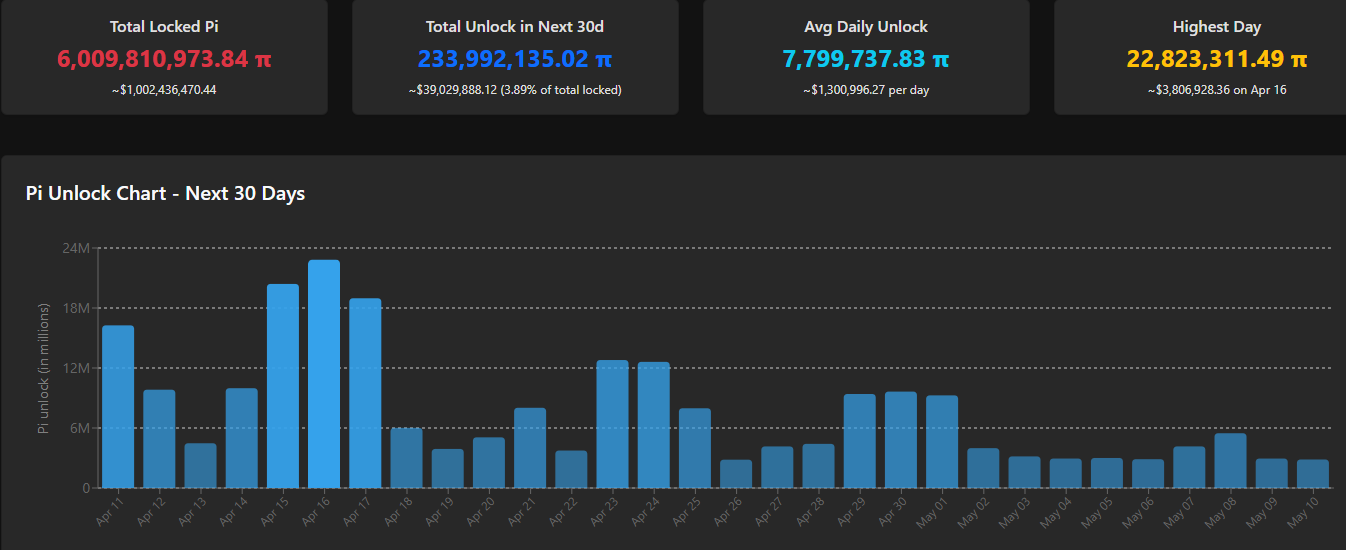
Nearly 8 million tokens on average are scheduled to be released daily in the following month, which could intensify the immediate selling pressure. A few days, between April 15 and 17, will see over 18 million coins released daily. More precisely, roughly 62 million tokens will be unlocked in the span of just 72 hours.
The post Pi Network’s Next Major Update Is Here, but PI Fails to Join Market Rally appeared first on CryptoPotato.
Source link