Unlock the White House Watch newsletter for free
Your guide to what Trump’s second term means for Washington, business and the world
The writer is a senior fellow at the Stimson Center and author of ‘Oil, the State, and War: The Foreign Policies of Petrostates’
In 1980, shortly after the Soviet invasion of Afghanistan, Jimmy Carter told Congress that “an attempt by an outside force to gain control of the Persian Gulf will be regarded as an assault on the vital interests of the United States of America, and such an assault will be repelled by any means necessary, including military force”.
This policy, which would become known as the Carter Doctrine, committed the US to defend the free flow of oil globally. But over the past few decades, America has come to play a more insidious role in global energy markets. True, the growth in US shale production has smoothed out some of the notoriously volatile gyrations of oil prices in times of crisis. But at the same time, US foreign policy choices have increasingly created destabilisation and distortions.
Consider Washington’s addiction to sanctions. Earlier generations of sanctions often included carve-outs to protect energy markets. But since at least Donald Trump’s first term in office, sanctions have become increasingly broad, with fewer exemptions.
“Maximum pressure” sanctions on Iran and Venezuela largely shut off sales to all international buyers, except through illicit mechanisms such as the shadow fleet. American and European sanctions on Russian oil exports following the invasion of Ukraine upended the global oil trade, with the chaos sending prices spiking for several months.
US military adventurism has likewise been problematic. Take the Obama administration’s choice in 2011 to intervene on behalf of Libyan protesters against the Gaddafi regime. Libya’s oil exports dropped to around 20 per cent of its prior output, removing a major producer from world markets, albeit in a period of low demand. It took several years for Iraqi production to recover from the 2003 US invasion, and ongoing conflict in the country has had long-lasting effects on its oil industry.
The war with Iran is merely the most recent case of America operating as a destabilising force in global oil markets. Traders and energy security specialists have long feared a conflict that would close the Strait of Hormuz to traffic, prevent exports from facilities in the Gulf or damage oil production infrastructure. All of this, however, was considered an unlikely scenario until now.
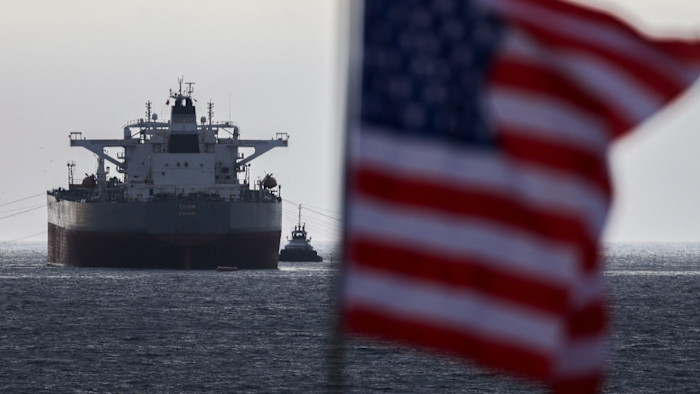
But the Trump administration has brought us far closer to just such a situation. Iran may not be physically blocking the Strait of Hormuz, but few captains (or their insurers) are brave enough to sail through an open war zone. Qatar has already shut down gas production, sending prices soaring, and producers such as Saudi Arabia and Iraq are beginning to shut in oil production as they run out of domestic storage.
Oil prices have been ticking up, and they are surging for specific commodities such as jet fuel, where the market is more constrained. The effects of America’s war of choice will be felt most acutely in Asia, where Japan, Taiwan and other US allies are heavily dependent on Gulf fuel. Both China and India are likewise starting to feel the pinch. And in Europe, still barely recovering from the aftermath of Ukraine energy shortfalls, prices have skyrocketed.
Ironically, these effects are already being felt by the American consumer as well. The Trump administration is looking for mitigation strategies, including loosening sanctions on Russia, and releases from the US or G7 strategic petroleum reserves. But such measures are unlikely to have a significant effect on prices if the war continues for weeks to come.
It increasingly seems that pressure from voters and markets feeling the pinch of increased energy costs may lead Trump to search for an off-ramp from this conflict. Pushback from US allies and adversaries alike has also begun. The Gulf states are in an impossible situation: facing significant economic impact from the war, but unable to break with the US. Indian refineries are already seeing shortfalls in supply of crude oil, while China has suggested it may negotiate directly with Iran to guarantee safe passage for its tankers.
Trump may soon back down. But while his is not the first administration to wield US power in a way that undermines global energy markets, the consequences of this war of choice are incalculable. One wonders how long China, India and others will tolerate these disruptions and their potential economic impact, before they conclude that American policy in the Middle East is a genuine threat to their energy security.
Source link