Unlock the White House Watch newsletter for free
Your guide to what Trump’s second term means for Washington, business and the world
The US has taken a decisive step to open Venezuela’s energy sector to Big Oil, weeks after President Donald Trump ordered special forces to seize Nicolás Maduro and said American companies would control its vast crude reserves.
The US Treasury department on Thursday eased legal restrictions that had prevented American oil companies doing business in Venezuela, a crucial step in opening the country’s upstream sector to investors.
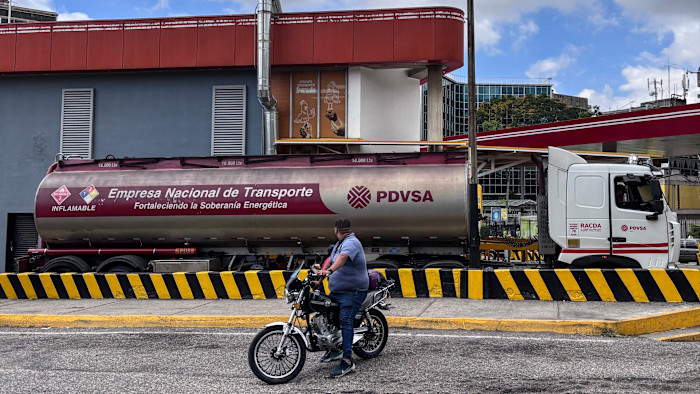
The “general licence” issued by Treasury’s Office of Foreign Assets Control will allow American groups to purchase and resell Venezuelan oil and authorises many transactions that had been prohibited by US sanctions, including doing business with state-owned oil company PDVSA.
The licence was announced shortly after Venezuelan lawmakers approved a sweeping reform of the country’s hydrocarbons law on Thursday.
The legislation, which was swiftly signed into law by Venezuela’s acting president Delcy Rodríguez, grants private companies control over the production and sale of oil and allows disputes to be settled by independent arbitrators.
“This law lets us make a real historic leap, turning those oil reserves, the largest in the world, into real prosperity,” said Rodríguez.
Venezuela has the world’s largest proven oil reserves, estimated at about 300bn barrels. It pumped roughly 3mn barrels a day at the turn of the century.
Years of corruption and mismanagement led production to collapse to about 500,000 b/d in 2020, with sweeping US sanctions on the sector imposed during Trump’s first administration also crimping output.
Production last year rose to roughly 950,000 b/d, largely buoyed by Chevron, whose sanctions-exemption licence makes it the only US oil major currently operating in Venezuela.
Sanctions experts said the general licence announced on Thursday appeared to exclusively benefit American oil companies as opposed to other foreign groups operating in the country.
“This is an extraordinary licence because on its face it only benefits US oil companies,” said Jeremy Paner, a partner at law firm Hughes, Hubbard & Reed.
“It provides no protection for the non-US players in Venezuela, who remain locked out of the US dollar and oilfield service providers for their Venezuelan operations.”
Oil traders Vitol and Trafigura have already signed deals with the US government and obtained separate licences to enable them to begin loading and exporting Venezuelan oil.
But despite the president’s desire for swift investment by US oil giants, some companies have said they will need strong financial, legal and security guarantees before they commit the billions of dollars needed to reboot the country’s ailing energy infrastructure.
Darren Woods, the chief executive of ExxonMobil, the biggest US oil producer, warned earlier this month that Venezuela remained “uninvestable” without “significant changes”.
Under Maduro’s populist predecessor Hugo Chávez, who ruled from 1999 until his death from cancer in 2013, Venezuela expropriated assets belonging to US oil companies, including ExxonMobil and ConocoPhillips, while installing political and military allies at PDVSA.
Orlando Camacho, a lawmaker from the pro-government bloc who presented the legislation, said on Thursday that the new law would “change the country’s economy”.
When the bill was first discussed by the National Assembly last week, one government-aligned lawmaker told the FT “there are many things that were ordered by the gringos . . . that law comes from the United States”.
Source link