Stay informed with free updates
Simply sign up to the Central banks myFT Digest — delivered directly to your inbox.
Unexpected interest rate cuts by the US Federal Reserve could push up UK inflation and force the Bank of England to delay its own easing, a member of the central bank’s Monetary Policy Committee warned on Friday.
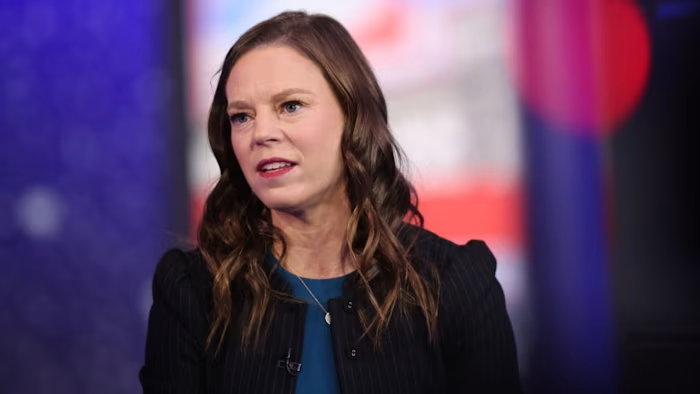
Megan Greene said unanticipated rate cuts by the Fed would affect 10-year gilt yields, currencies and UK equity prices, leading to an overall loosening in UK financial conditions that would be likely to put upward pressure on inflation and outweigh the effect of a stronger pound.
It would not make sense for the BoE to second-guess the likely direction of US rates, Greene told an event hosted by the Resolution Foundation think-tank in London, but markets were pricing in a large risk of a looser Fed policy stance.
“If this were to materialise, then it would — all else equal — push up on UK inflation,” said Greene, an external member of the MPC. “This would, in my view, give even greater cause for concern about a risk of UK inflation persistence over that of weaker demand, warranting a slower withdrawal of monetary policy restriction in the UK.”
Greene’s comments come against a backdrop of intense political pressure on the Fed to slash interest rates, as well as open warfare between the White House and central bank since the launch of a federal investigation into chair Jay Powell over a $2.5bn renovation of the Fed’s headquarters in Washington.
Donald Trump said in Davos this week that he would nominate a new Fed chair to replace Powell when his term ends in May “in the not too distant future”.
The US president, who appointed Powell at the start of his first White House term, also complained that officials who appeared compliant when nominated could “change once they get the job”.
Greene, one of the more hawkish members of the MPC, said the effects of any change in the Fed’s stance could be mitigated by other central banks holding or tightening their own stance, and should be placed in the wider context of the UK domestic economy.
Since the start of the millennium, central banks have tended to move in sync, with their economies increasingly integrated and swayed by similar global forces.
But even before taking political pressures into account, investors think differing outlooks for growth, labour markets and inflation will lead to divergence between the major central banks in 2026.
The MPC will next meet to set rates in February and is expected to leave its benchmark rate unchanged at 3.75 per cent, after official data showed the UK economy was more resilient and inflation slightly higher than expected at the end of last year.
The committee remains split between a more hawkish contingent worried about persistent wage pressures and a more dovish group focused on the risks of escalating job losses.
Greene said that while weak demand could pull down inflation, especially since “waiting for consumption to rebound in the UK has become like waiting for Godot”, her main concern was wage growth remaining too strong to be consistent with the 2 per cent inflation target.
Source link