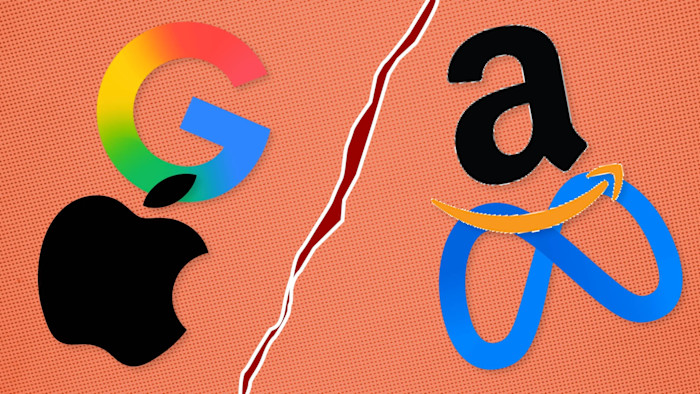
Washington’s effort to split up Big Tech groups is faltering after setbacks in several big monopoly cases that cast doubt on the government’s strategy to rein in some of the world’s biggest companies.
Federal enforcers have over the past year struggled to convince judges to order tech groups, including Google and Meta, to spin off large parts of their businesses, such as the Chrome browser and the social media platform Instagram.
This drive to break up some of the largest US companies, which began during the first Trump administration and expanded under Joe Biden, marked the biggest challenge in decades to the tech industry’s alleged anti-competitive behaviour.
Prosecutors have won some landmark rulings that tech companies maintained illegal monopolies. But judges have been reluctant to reach for the strictest remedies and carve up businesses or unwind acquisitions, often many years after the fact.
With monopoly cases against Apple and Amazon pending, these decisions have called into question the government’s approach to taming the power of these tech giants.
“I wish courts had been more decisive,” said Jonathan Kanter, who as former head of the antitrust division in the Department of Justice was a top competition enforcer under Joe Biden.
He said the rulings suggested the US had been too slow to act “in real time” as tech companies hoovered up competitors and built dominance in their markets. “There’s an important lesson here, which is not to let the monopolies form or maintain themselves illegally in the first place,” Kanter added.
The final outcomes of these tech monopoly cases may still be years away as lengthy appeals are expected to unfold. Top antitrust officials appointed by Trump have remained committed to these legal challenges.
But last year’s setbacks create a new opening for tech bosses such as Mark Zuckerberg, who have courted the Trump administration, to step up their lobbying for a retreat from aggressive antitrust enforcement.
The speed of technological change — particularly in AI — has loomed large over rulings that have favoured Big Tech.
“The fast-changing nature of these markets — which is especially the case given recent improvements in artificial intelligence — raises hurdles” for antitrust watchdogs, said Michael Carrier, professor at Rutgers Law School, who said the government had faced an “uphill climb”.
In one case against Google, Judge Amit Mehta ruled in August that the company had spent billions of dollars on exclusive deals to maintain an illegal monopoly in internet search.
But he handed the company a big win in September when he declined to order a divestiture of Chrome or its Android operating system, as requested by the DoJ.
Mehta argued the threat to Google’s roughly $200bn-a-year search business posed by AI chatbots was crucial to his decision to impose softer remedies. “The emergence of [generative AI] changed the course of this case,” he wrote in his decision.
James Boasberg, the judge presiding over the Federal Trade Commission’s case against Meta, also noted that the “massive leap in AI” had drastically changed social media since the social media group acquired Instagram and WhatsApp in 2012 and 2014 — deals the regulator sought to unwind.
He accepted Meta’s argument that it faced fierce competition from TikTok, which the judge said had “spread furiously” since its arrival in the US in 2018. Boasberg in November ruled that Meta does not hold an illegal monopoly.
Courts are also showing caution around the complexity of so-called structural remedies, such as breaking up multitrillion-dollar companies, preferring to order companies to change their behaviour.
Mehta argued that judges “must approach the task of crafting remedies with a healthy dose of humility”. Citing a Supreme Court case, he wrote: “Courts reviewing complex business arrangements should . . . be wary about invitations to ‘set sail on a sea of doubt’.”
Judge Leonie Brinkema, who is overseeing the separate Google case involving advertising, ruled in April that the company “wilfully” monopolised parts of the digital ads market.
But in a final hearing in November, she expressed concern about prosecutors’ request to split up Google’s advertising business and whether such an order would be readily enforceable.
Brinkema noted that a potential buyer for Google’s ad exchange had not been identified, saying she was “concerned” that a potential divestiture was at a “fairly abstract level”. The “court has to be far more down to earth and concrete”, Brinkema added. She is expected to hand down a decision this year.
Bill Kovacic, former chair of the FTC, argued that government lawyers had failed to “fully appreciate” how modern jurisprudence “instils caution in federal judges”.
He said more could have been done to assuage their anxiety, including presenting more “concrete details” about asset sales.
The FTC and DoJ did not respond to requests for comment.
Gail Slater, the Donald Trump-appointed head of the DoJ’s antitrust unit, after Mehta’s ruling said she was weighing options and “thinking through whether the ordered relief goes far enough”.
After the Meta decision, the FTC said it was “deeply disappointed” and was “reviewing all our options”.

The Google search and Meta cases, both filed in the first Trump administration, ushered in a new era of antitrust enforcement after decades in which agencies did not seek such sweeping action against monopolies in Big Tech — something last attempted on a similar scale against Microsoft with a 1998 DoJ complaint.
Biden-era competition enforcers, including Kanter and former FTC commissioner Lina Khan, turbocharged monopoly lawsuits, expanding to sectors beyond tech and bringing the Google advertising case as well as suits claiming that Amazon had hurt its customers, rivals and sellers and that Apple monopolised smartphone markets.
Amazon and Apple, which face trials in 2027, have said the lawsuits are factually and legally flawed.
The tech rulings of 2025 have shown how enforcement delays can undermine efforts to combat market dominance.
Monopoly cases brought in the past four years “should have been brought 10 years earlier. The remedies would have been quite straightforward and achievable,” Kanter said.
“The decisions to refrain from bringing enforcement actions did not age well,” he added, since it meant “the monopolies calcified”.

In his opinion, Boasberg appeared to agree, stressing that the landscape had “changed markedly” since the FTC sued Meta in 2020.
“Whether or not Meta enjoyed monopoly power in the past . . . the agency must show that it continues to hold such power now. The court’s verdict today determines that the FTC has not done so,” he added.
These cases have also focused attention on how to regulate emerging technologies such as AI.
Slater, in a September speech about AI, said that creating a level playing field through antitrust enforcement “is always important, but it is crucial where the technology is still developing rapidly”.
Some experts fear that these decisions may entrench judges’ aversion to structural remedies or discourage enforcers from pursuing monopoly cases, leaving anti-competitive conduct unpunished.
But Kanter argues the recent tech cases show progress. Convincing courts to exercise their authority was “one of the reasons why it’s important to bring big, ambitious cases”, he said. “Once you establish that the rule of law applies, in time, the remedies will follow.”
“This was never going to be easy,” he added. “We were basically reviving an area of law from the dead. And that takes time.”
Source link